

Ordination Information and Curriculum
Introduction
“Clouds and Water” is a colloquial term to refer to renunciant Zen monks in training. While in this lineage we do not typically live our lives as home-leaving monks, we borrow this phrase to try to capture the spirit of renunciation and commitment.
The Clouds and Water Renunciation Ceremony is a threshold that represents two major aspirations for a Zen practitioner:
- Renunciation – In this ceremony, we vow to renounce our blind belief in the illusion of our self-identity and the resulting greed, hate and delusion that stems from being caught by this illusion.
- Service – In this ceremony, we express our desire to live our lives in service to others. Specifically, we look to provide dharma-centric service that makes sense in the context of our lives. For some people, this might mean leading a sitting group. For another, it might be working as a chaplain. For another, it might be volunteering at a practice center. There are many possibilities.
Ordination Certificate Types
When one completes the Cloud and Water Renunciation Ceremony, the student will receive a certificate indicating their new status. Depending on the life circumstances of the student and their service aspirations, they can choose to receive one of the following certificate types:
- Priest Ordination (Shukke Tokudo) Certificate – Shukke Tokudo can be translated as “Leaving home and entering the way”. This certifies the student as a priest in the lineage of Dogen Zenji. This choice might be made due to a calling to live life in a clerical capacity and it might be helpful for some careers such as chaplaincy. With this certificate the student will have the title of “Priest”.
- Lay Ordination (Zaike Tokudo) Certificate – This is the “lay” equivalent of Shukke Tokudo. Zaike Tokudo can be translated as “Staying home and entering the way”. With this certificate, the student will have the title of “Lay Ordained Student”.
Zen Mindfulness Instructor Certificate
When one completes the Clouds and Water ceremony, they will also receive a document certifying them as a “Zen Mindfulness Instructor”. This empowers them to offer meditation instruction while leading sitting groups or meditation classes. Many organizations will ask for credentials before they are willing to host such events, and this certificate fulfills this need.
Specific empowerments granted by the certificate are:
- Give Zen meditation instruction
- Answer group questions about the practice of Zen Buddhism
- Lead a sitting group
- Lead a one-day meditation retreat
Requirements for the Clouds and Water Renunciation Ceremony
The following are the requirements for the Clouds and Water Renunciation Ceremony:
- Have Received Precepts – The initiate needs to have received the Zen Buddhist Precepts and taken refuge under Buddha, Dharma and Sangha under a transmitted Zen teacher.
- Obtain Black Rakusu – The initiate needs to have sewn or purchased a black rakusu. Preferably with a ring. A black Okesa robe is optional.
- Obtain Black “Samu-gi” – A “Samu-gi” is a soft fabric outfit worn by Zen practitioners. A black karate gi is a suitable substitute as long as it does not have any iconography or large writing on it. Optionally, an initiate can partake in the ceremony wearing a black “koromo” robe, but they must still own a regular black gi.
- Finished Clouds and Water Training – An initiate must have completed Clouds and Water Training as defined in this document. Note that some students may have completed a portion of this curriculum in preparation for receiving the precepts or koan training preparation.
Further Paths after Ordination
After ordination, my students can optionally choose to work towards the following goals:
- Practice Leader – This is someone who has received both ordination and been a “Head Student” for a practice period (ango). This empowers the student to give practice advice in private one-on-one meeting with another student to help them with meditation relates issues and to lead multi-day retreats. This also qualifies a student to work as a volunteer chaplain should they feel called to this path.
- Assistant Zen Teacher – This empowers a practitioner to be a preceptor in refuge, precept and ordination ceremonies. On a case-by-case basis, the practitioner might also be given permission to lead other students in the beginning stages of koan study.
- Dharma Transmission – This empowers the practitioner to create assistant Zen teachers and give dharma transmission.
Becoming a Practice Leader is open to every ordained student who has served as a head student for a practice period. Becoming an Assistant Zen Teacher or receiving Dharma Transmission is neither expected nor guaranteed. Those paths might not make sense for every practitioner for multiple reasons.
Ceremonial Activity
If you able to do so without freaking your family out or annoying them, I would recommend adding a “Zen Service” to your daily practice during your ordination training. This will involve setting up an altar of:
- Small Buddha Statue (center of altar)
- Candle
- Incense Bowl with ash in it
- Small Vase of Flowers
You can start off a service by:
- Walking up to your altar
- Bowing to the left of it
- Side stepping so you are in front of the statue
- lighting incense
- side stepping to the right of altar and bowing
- Walk back to your starting spot
One Chant Per Day, alternating from this list:
- Heart Sutra in English
- Heart Sutra in Japanese (Makka Hannya Haramitta Shin Gyo)
- Loving Kindness Meditation
- Harmony of Difference and Equality
Do a dedication of merit with hands in gasho:
- We dedicate the merit of chanting [Name of Chant] to
- All Beings everywhere
Then Chant:
- All Buddhas, ten directions, three times
- All Honored Ones, Bodhisattva Mahasattvas
- Wisdom beyond Wisdom, Maha Prajna Paramita
Then do three bows to the altar
Here are some chants you can listen to get a sense of the cadence:
https://www.sfzc.org/offerings/establishing-practice/services-sutras-texts-songs
Look under the Recordings section.
Training Curriculum
Exploration of the first grave precept: Do no kill
Homework:
- In what ways do you directly or indirectly kill?
- What problems does it cause for you and other people?
- What motivates you to do it?
Exploration of the second grave precept: Do not steal
Homework:
- In what ways do you directly or indirectly steal?
- What problems does it cause for you and other people?
- What motivates you to do it?
Exploration of the third grave precept: Do not misuse sexuality and intimacy
Homework:
- In what ways do you misuse sexuality and intimacy?
- What problems does it cause for you and other people?
- What motivates you to do it?
Exploration of the fourth grave precept: Do not lie
Homework:
- In what ways do you communicate falsehoods or withhold the truth?
- What problems does it cause for you and other people?
- What motivates you to do it?
Exploration of the fifth grave precept: Do not abuse intoxicants, pleasurable activities and engage in escapism
Homework:
- In what ways do you abuse intoxicants, pleasurable activities and engage in escapism?
- What problems does it cause for you and other people?
- What motivates you to do it?
Exploration of the sixth grave precept: Do not speak of ill of others
Homework:
- In what ways do you speak ill of others?
- What problems does it cause for you and other people?
- What motivates you to do it?
Exploration of the seventh grave precept: Do not elevate self at the expense of others
Homework:
- In what ways do you elevate self at the expense of others?
- What problems does it cause for you and other people?
- What motivates you to do it?
Exploration of the eighth grave precept: Do not be stingy
Homework:
- In what ways are you stingy?
- What problems does it cause for you and other people?
- What motivates you to do it?
Exploration of the ninth grave precept: Do not be angry
Homework:
- In what ways do you express anger?
- What problems does it cause for you and other people?
- What motivates you to do it?
Exploration of the tenth grave precept: Do not misuse Zen Training
Homework:
- In what ways do you or could you misuse Zen training?
- What problems does it cause for you and other people?
- What motivates you to do it?
Exploration of the first pure precept: Do not engage in evil/harm
Homework:
- Explore your feelings about not engaging in evil/harm.
Exploration of the second pure precept: Practice Good
Homework:
- Explore your feelings about practicing good.
Exploration of the third pure precept: Manifest Awakening
Homework:
- Explore your feelings about awakening.
Exploration of the Triple Treasures.
Homework:
- What are the triple treasures?
- What are your feelings about them?
First Aggregate – Body/Rupa
The sense of having a body.
Homework:
- Can you isolate the experience of having a body and a drive to survive?
- Is it part of your essential self?
- Practice giving a summary of this topic to someone who does not understand it.
Second Aggregate – Vedana/Feeling-tones
Our capacity to experience pleasant and unpleasant sensations (including emotions). These feeling tones are rewards and punishment sent to us from our subconscious to influence our behavior.
Homework:
- Can you isolate the experience of experiencing pleasant and unpleasant sensations?
- Is it part of your essential self?
Third Aggregate – Samjna / Perceiving and Categorizing the World
We perceive objects and situations in the world and can label and categorize them. This learning allows us to efficiently understand what is happening to us as we navigate through and interact with the world around us.
Homework:
- Can you isolate the experience of perceiving and categorizing objects in the world?
- Is it part of your essential self?
- Practice giving a summary of this topic to someone who does not understand it.
Forth Aggregate – Samskara / Decision Making
Decisions are made based on trying to optimize feeling good and avoiding feeling bad. These decisions depend on perceptions and categorizations combined with memories of feeling-tone (Vedana) associations. To choose between options, the brain runs multiple simulations of future possibilities and then decides between the one it thinks will feel the best. Best-guess feeling-tone outcomes are the primary criteria that the mind uses to choose between options.
Many factors influence what a best-guess feeling-tone outcome may be. Some examples:
- Pleasure and displeasure from the six senses
- Values and beliefs
- Context
- Mood and emotions
Homework:
- Can you isolate the experience of having motivated intention and decision making?
- Is it part of your essential self?
- Practice giving a summary of this topic to someone who does not understand it.
Fifth Aggregate – Vijnana / Dualistic Consciousness
The ability to perceive objects through the six senses.
Homework:
- Can you describe what Vijnana is in terms of the six senses?
- Can you isolate the experience of having dualistic consciousness?
- Is it part of your essential self?
- Practice giving a summary of this topic to someone who does not understand it.
Can you isolate the experience of having a sense of an embodied self?
Primarily a combination of rupa (feeling like a body) and Vijnana (sensing external objects). This combination gives us a feeling of being and objects in a world of other objects.
Homework:
- Can you isolate the experience of having the experience of having an embodied self?
- Is it part of your essential self?
- Practice giving a summary of this topic to someone who does not understand it.
Can you isolate the experience of having a sense of a continuous self?
The felt sense of having existing and the sense that you will exist in the future. This is a function of memory and the mind’s ability to run simulations of the future.
Homework:
- Can you isolate the experience of having the experience of having a continuous self?
- Is it part of your essential self?
- Practice giving a summary of this topic to someone who does not understand it.
Can you isolate the experience of having a sense of a narrative self?
This is the experience of having autobiographical thoughts about ourselves and the related beliefs about how the world should work in order to ensure that we are safe and happy. The framework of this type of mental activity is a narrative timeline. These are stories we tell about ourselves and the world we live in. It is a very high-level and abstract way of perceiving and processing reality.
Homework:
- Can you isolate the experience of having the experience of having a narrative self?
- Practice giving a summary of this topic to someone who does not understand it.
Is it part of your essential self?
Can you isolate the experience of having a social self?
If we pay attention, we will notice that the majority of the stories we tell ourselves and the primary filters in which we think about life are social in nature. The primary survival strategy of a human being is social competition and cooperation, so having a sense of a social self is critically important.
Having a narrative sense of who we are and how we expect other people to behave is necessary to successfully decide how to react to the events in our life.
It is very important to know who our allies are and who can be trusted.
It is important to be able to contemplate, articulate and communicate our worth to other people so that we can participate in the social matrix of human relationships that are so important for survival.
All this in totally is our sense of social self.
Homework:
- Can you isolate the experience of having the experience of having a social self?
- How much of your self-referential cognition is social in nature?
- Is it part of your essential self?
- Practice giving a summary of this topic to someone who does not understand it.
Can you isolate the experience of Self Identity (Atman/Sakkaya Ditthi)?
Self-identity is the totality of the experience of simultaneously being various types of selves and the associated beliefs and narratives about that constructed self.
This self-identity exists because it is needed by the five-aggregate decision-making system to decide on how to interact with the world.
This is why a sense of self is intimately tied with the five-aggregate system. The Buddha uses them as synonyms.
Our self-identity contains narrative beliefs about ourselves and how to work works from the perspective of how to optimize feeling good and avoid feeling bad. It is the filter through which we perceive the world and make decisions.
The majority of the beliefs that make up our self-identity are social in nature. This is because your happiness and survival largely depends on effective social relationships.
Homework:
- Can you notice how you have a self-identity?
- Is it part of your essential self?
- Practice giving a summary of this topic to someone who does not understand it.
Can you isolate the experience of Dualistic Conceptualization / Prapanca?
Dualistic conceptualizations are the specific thoughts you have about how to how to interact with the world. They take the form of “sentences” such as “I should not wear this jacket because I will be too hot” or “It is better when my boss is nice and respectful”.
Prapanca is “dualistic” in the sense that it creates sentences from the perspective of what best serves the self (as opposed to “other”). They are thoughts about what will help us optimize feeling safe and happy.
Dualistic conceptualizations are formed through the filter of our self-identity. Our beliefs about ourselves and the world influence the thoughts we have.
Dualistic conceptualization fundamentally requires mental time travel as a prerequisite to its functioning. The “sentences” of dualistic conceptualization implicitly assume a past and future. Without the mind being in time-travel mode, dualistic conceptualization is not possible.
Dualistic conceptualizations define what our goals and expectations are.
Homework:
- Can you notice how dualistic conceptualizations define what your goals and expectations are?
- What role does wanting to feel good and wanting to avoid feeling bad play in these thoughts?
- Can you notice the mental time-travel inherent in Prapanca?
- Who is the author of dualistic conceptualizations? Do you decide what you think?
- Practice giving a summary of this topic to someone who does not understand it.
Can you Name All the Five Aggregates and Explain their Function?
Homework:
- Can you name each aggregate, describe it’s function and provide a translation?
- In general, what is the purpose/function of the five aggregates as a whole?
- What is the relationship between the five aggregates and a sense of self?
Can you isolate the experience of desire/chanda and craving / tanha?
Desire (chanda) and craving (tanha) are two related terms that have to do with wanting something or wanting a scenario. These can take the forms of expectations, wants, goals, preferences, hopes and aspirations.
Desires can be wholesome, neutral or negative.
Craving (tanha) is, according the four noble truths, co-created (samudaya) with suffering. In other words, it is a desire that can be defined as “craving” when it participates in the chain of causation that leads to suffering. Since unfulfilled desires are a perquisite to suffering, a desire that is met or fulfilled is not tanha since it is not participating in the creation of suffering.
Craving (tanha) that leads to a notable degree of suffering will typically have a particularly strong feeling-tone consequence tied to the craving not being met. The feeling-tone consequence is our subconscious’s effort to reward/punish us to fulfill a specific desire because it perceives that this desire has important survival or procreation implications.
Cravings have an embodied “felt” sense that comes across as an “urge”.
Homework:
- Report back on a desire/preference/expectation (chanda) that has little or no pleasant/unpleasant consequences
- Report back on a desire/preference/expectation (chanda) that has pleasant/unpleasant consequences and was successfully fulfilled
- Report back on a craving (tanha) that has pleasant/unpleasant consequences and was unsuccessfully fulfilled and thus you experienced dissatisfaction (dukkha)
- Do you have any control on what you desire or crave?
- Practice giving a summary of this topic to someone who does not understand it.
Can you isolate the experiencing of Grasping (Upadana)?
Grasping (aka clinging) is when the mind’s attention is hijacked by:
- Not getting something we want/expect (aka crave)
- Losing something that we want/expect (aka crave)
- The prospect of losing something we want/expect (aka crave)
- The prospect of not getting what want/expect (aka crave)
Grasping manifests as self-referential narrative thoughts such as:
- “I really wanted that raise.”
- “I might lose my family.”
- “I am worried my offer for that home might not get accepted.”
- “I can’t believe my best friend is ghosting me.”
- “Why was I not invited to the party all my friends were at?”
In all those cases, there is something the “I” (self-identity) wants and is not getting (or might not get). The more consequential the perceived “survival implications” of the situation are, the more intense the experience of grasping is. These “survival implications” are the asavas.
This grasping is particularly odious when the mind continuously and uncontrollably ruminates over the unmet desires. You can think of this as when the mind is stuck in the samskara (motivated decision making) phase of the five-aggregate decision-making process. When the mind can’t envision a pathway to fulfilling a desire, it repeatedly re-attempts the analysis even though it is quickly becoming unproductive and painful. Very specifically, it is intolerance of uncertainty that leads to repetitive grasping.
Homework:
- Can you notice when your mind’s attention is hijacked by not getting what we want/expect?
- Can you notice when your mind repetitively ruminates/worries when it cannot find a way to satisfy cravings?
- Can you notice that the intensity in which it repetitively ruminates/worries is direct proportion to the perceived feeling tone reward/punishment.
- Practice giving a summary of this topic to someone who does not understand it.
Can you isolate the experience of suffering / dukkha?
Dukkha can be translated as discontentment, unease or suffering. It can range from mild to overwhelming.
Dukkha exists as the subconscious’s method of motivating you to fix what the subconscious perceives as a problem needing fixing.
Pain becomes suffering or dissatisfaction when we cling (upadana) to unmet (or potentially unmet) cravings/desires/expectations (tanha). Pain is just a raw experience, while suffering comes from the actual narrative of not getting what we want. It’s possible to experience pain without associated suffering.
Pain and suffering are typically experienced together, and a “normal” person would usually never even consider the possibility that they are dissociable human experiences. It usually takes a practice like Zen to begin to understand that they are separate and only optionally combined together.
Suffering is the body’s way to motivate us to act when we are not getting what the mind thinks it needs/wants.
Upadana (clinging/grasping) can also be translated as “fuel”. It fuels the experience of suffering.
Homework:
- Can you notice how feelings of suffering or dissatisfaction are designed to motivate you to do something to “fix the problem”.
- Can you notice that the subjective feeling of suffering lasts as long as you fuel it with the repetitive negative thinking of upadana (clinging/grasping)?
- Practice giving a summary of this topic to someone who does not understand it.
Can you isolate the experience of Afflictive Emotions (kleshas)?
Mental afflictions are specific negative emotions that come with suffering. Since dukkha/suffering exists to motivate us to solve an unmet craving, our body can have specific emotions to solve different types of unmet craving.
Some examples of afflictive emotions are:
- Anger
- Sadness
- Loneliness
- Disappointment
- Impatience
- Fear
- Heartbreak
- Can you notice in your own life how these afflictive emotions are specific strategies of the subconscious to motivate us to solve an unmet craving?
- Practice giving a summary of this topic to someone who does not understand it.
Can you explain to a novice what Mental Contaminants/Taints (Asavas) are?
Mental contaminants are our drive to exist and the related needs to feel good and avoid feeling bad. The greater the degree of mental contaminant a craving has, the greater the intensity clinging and suffering there will be when that craving is unmet.
According to the teachings of the Buddha, there is a difference between “The Five Aggregates” and the “Five Aggregates of Clinging”. I think this points the experiential difference between “having self-related mental activity” and “getting caught by self-related mental activity”. The Buddha teaches that difference between the two is that the “Five Aggregates of Clinging” are contaminated/tainted by our need to experience pleasure, and our need survive.
Obviously, a desire to experience pleasure or a need to survive is fundamental to being a functioning human being, so calling them “taints” might feel a bit strange. I think the way to interpret it is that these drives are “bad” when they are being used to fuel grasping. We can have these drives and not get caught up in grasping and in that case, they are not “taints” but rather just normal healthy mental functioning.
Homework:
- Can you notice how the magnitude of suffering or discontentment correlates proportionally to how the subconscious perceives what the survival implications of the unmet desire is?
- Practice giving a summary of this topic to someone who does not understand it.
Can you explain what the chain of causation is that leads suffering?
Putting together everything that we have learned about the self-identity illusion, dualistic conceptualization, craving and clinging, it is important to look at the sequence as a whole. This sequence is the root of all suffering.
The general sequence is:
- Self-Illusion (Atman/Sakkaya Ditthi) – The real-time cognitive activity that processes reality through the lens of a sense of ongoing persistent self and that self’s autobiographical beliefs and that self’s beliefs/assumptions how the world needs to work to make us safe and happy.
- Dualistic Conceptualization (Prapanca) – The specific thoughts we have about what needs to happen for us to feel safe and happy.
- Craving (Tanha) – Our dualistic conceptualizations of what we think we need can manifest as a “felt need”. The higher the emotional consequence is of having a desire met it unmet is, the more intense we will crave it.
- Grasping/Clinging (Upadana) – The thoughts that result from unmet cravings. They are particularly problematic when they are repetitive and unproductive in nature.
- Suffering/Discontentment (Dukkha) – The emotional punishment we feel that corresponds to grasping. It is the subconsciousness’s way of motivating us try and solve the problem of the unmet craving.
- Afflictive Emotions (Kleshas) – Specific emotional strategies that the subconscious uses to motivate us solve unmet cravings.
This can also be visualized with this image:
Homework:
- Practice giving a summary of this topic to someone who does not understand it.
- When you experience some type of suffering, ask yourself the following questions to see if you can notice all the layers that participate in the afflictive experience:
- Afflictive Emotions and Suffering – Define what kind of afflictive emotion it is that is arising with your experience of suffering. Some examples might be: Anger, Sadness, Jealousy, Frustration, Impatience, Hopelessness, Boredom, Contempt, Shame, Loneliness, Guilt, etc.
- Grasping – Try and notice what the “sentence” is that is causing you to grasp/ruminate enough to cause the suffering due to an unmet goal/expectation/hope/desire/craving. Define the disappointment. This will usually be in the form of something like “I wish I had won that content” or “I hope I am not fired” or “She should not have talked about me that way”. It is basically a sentence that conveys an idea that you wish reality is other than what it is (or might be other than what is is).
- Craving – Notice how you had/have an embodied and physical urge that led to the unmet goal/expectation/hope/desire/craving. Notice the physical sensation of the urge. It’s an embodied “wanting”. Notice how the magnitude of the urge directly correlates the magnitude of the grasping and suffering.
- Dualistic Conceptualization – Identify the specific sentence that set the stage for the disappointment (or worry about a potential disappointment). For example, if you grasped at the disappointment “I am frustrated I didn’t get to eat pizza”, the expectation that was needed to set up this scenario was “I hope I get to eat pizza”. These dualistic conceptualizations will always include an “I” and a goal/expectation/hope/desire/craving that the “I” hopes will be fulfilled.
- Self-identity Belief – What belief underpins and allows for the existence of the dualistic conceptualization. In this simple scenario above, the self-identity belief could be “I like pizza”.
- Reward/Punishment – Notice how the experience of discontentment/suffering that you are experiencing is a aversive feeling-tone punishment for not having a goal/expectation/hope/desire/craving fulfilled. Notice how if it had been fulfilled, you would have been rewarded with a pleasant feeling-tone punishment. This is one facet of the experience of the asavas.
- Survival Need – Try and identify the specific survival need that is motivating your subconscious to reward/punish you. Examples might be: social acceptance/cooperation, sustenance, shelter, employment, physical safety, clothing, tools, physical/emotion health, sleep, procreation/children, etc. This is another facet of the experience of the asavas. Note that this can be about your own survival or the survival of a loved one.
- Grasping – Try and notice what the “sentence” is that is causing you to grasp/ruminate enough to cause the suffering due to an unmet goal/expectation/hope/desire/craving. Define the disappointment. This will usually be in the form of something like “I wish I had won that content” or “I hope I am not fired” or “She should not have talked about me that way”. It is basically a sentence that conveys an idea that you wish reality is other than what it is (or might be other than what is is).
How can you disrupt the chain of causation that leads to suffering?
We have seen how suffering is caused by the chain of causation of Self-Identity->Dualistic-Conceptualization->Craving->Grasping.
When we can only see reality though the filter of our self-identity and are powerless against our attention being hijacked by the narratives of the self-identity, we will be too often stuck in suffering. When we are locked into a calcified and narrow view of ourselves, we are overly susceptible to being carried away by repetitive negative thinking such as rumination and worry.
The key question would be, how do we disrupt this chain of causation? The third noble truth states that the way to end suffering is to end craving. This leads some people to think we must now try to directly force ourselves to not crave via our willpower and a brute force explicit effort. Unfortunately, this is not possible. We must attack the issue by removing the very foundation of the chain of causation. This foundation is being fooled by our self-identities.
We break free of the illusion and enslavement of the self-identity buy increasing our competence in mindfulness and samadhi. We increase our capacity to do this by also doing our best to live in accordance with the precepts. The more stable and wholesome our lives are, the better chance we have at developing mindfulness and samadhi.
Homework:
- Notice how we simply cannot “decide” to not crave and cling to expectations.
- Practice giving a summary of this topic to someone who does not understand it.
Can you isolate the experience of Mindfulness (Sati)?
The brain has two main modes of wakefulness. One is “Self and time travel” mode and the other is “Present Moment Awareness Mode.” You can also say that the mind has two perspectives. One is “Self and time travel” perspective and the other is “Present Moment Awareness perspective.”
When the mind is in “self” mode or viewing reality from that perspective, it can engage in dualistic conceptualizations, cravings and grasping and these result in suffering and dissatisfaction.
When the mind is in “present moment awareness” mode or viewing reality from that perspective, it disables the dualistic conceptualization->cravings->grasping process since mental time travel is not present. This causes the cessation of suffering.
The mind is designed so that the two modes cannot be fully active at the same time, when one increases, the other decreases.
For this reason, when we are in “present moment awareness” mode, this shuts down the suffering producing “self” mode.
It is worth noting that when we shift into present moment awareness and disable the downward spiral of repetitive negative thinking, we might not feel better immediately. It takes a while for a revved-up nervous or emotional system to calm down once it gets going. However, the sooner we stop the repetitive negative thinking, the sooner we give our body a chance to stop feeling upset.
“Sati” is the word usually translated as “mindfulness”. It means “to remember”. It is remembering to bring attention away from the “self” mode that is lost in time-travel and to the present moment.
The more we do this, the better we get at it and eventually it can become automatic.
Homework:
- Can you notice how remembering to invoke mindfulness short-circuits the dualistic conceptual narratives that cause suffering?
- Can you notice that the nervous system can stay revved up for a while even after we stop the downward spiral of repetitive negative thinking?
- Practice giving a summary of this topic to someone who does not understand it.
Can you avoid getting caught by habitual behaviors?
We saw that in our study of the precepts that our suffering-causing behavior is often habitual and is motivated by a desire to feel good and avoid feeling bad.
Habitual behaviors are most likely to occur when we are caught up in the “self” mode. The more we are able to reside in the “current moment awareness” mode (aka mindfulness), the less likely we are going to engage in habitual behavior.
The first step is to notice when we are behaving automatically due to our need to feel good and need to avoid feeling bad. Being able to objectively notice when we are doing this or are about to do this is key in bringing mindfulness to the situation. When we do this, we greatly increase our chances of acting deliberately and not getting caught by habitual responses.
We can notice that when we are feeling bad (or bored) that our mind automatically wants to cover up it up or change it with a habitual behavior. Examples of this might be binge watching a show or drinking beer to excess to avoid boredom, scrolling on reddit to avoid a stressful school or work project, lashing out in anger when someone is stressing us out or acting a certain way because one feels socially awkward. These are all habitual behaviors that one might engage in.
Another scenario is when there is something that our mind has been habituated to do because it has learned that it will bring pleasure. For example, if someone is addicted to porn or video games, the mind has been habituated by it’s subconscious belief that these activities will bring lots of pleasure.
Once mindfulness has been established and our attention is residing in present moment awareness, our chances of being deliberate and not falling into habitual behavior increases dramatically.
Homework:
- Can you notice when being mindful increases your chances of not falling into habitual behavior?
- Practice giving a summary of this topic to someone who does not understand it.
Can you reduce cravings with Mindfulness?
One way to reduce habitual behaviors that break the precepts is through simply not reinforcing them. The less they are reinforced, the less the intensity of craving will be over time.
If we can find the strength to abide with and accept the unpleasant mental state of an unmet craving, that gives the subconscious mind the opportunity reduce the reinforcement that has been built around particular habitual behaviors.
Homework:
- Choose a habitual behavior and practice not giving into it.
- Practice giving a summary of this topic to someone who does not understand it.
Can you Unlearn habitual behaviors?
Our habitual behavior is programmed into the mind when a situation leads to good or bad feelings. These good or bad feelings are triggers that alert the subconscious that there is something that needs to be learned and turned into a habit.
For example, if every time you try voicing an opinion in a meeting you are ignored and talked over, that will feel unpleasant, and you’ll probably habitually learn to not share your opinions in that context or possibly even in general. The unpleasant feeling was the trigger to learn subconsciously learn the behavior.
Good and bad feelings are what create habits, and it turns out that they can also be used to unlearn habits. Good and bad feelings are the language of the subconscious mind and to change habits we need to use feelings as a tool. Pure logic and willpower are very poor tools to change habits. For example, just telling yourself, “I want to eat less candy” is not as effective as we would like. Our habits often overwhelm our hopes of living healthier and more compassionate lives.
They key to using good and bad feeling-tone experiences to unlearn habits is to use mindfulness to pay attention.
The brain engages in habitual behavior based on a learned assumption of how much “value” that this behavior has associated with it. For example, at some point my brain has decided that “eating donuts is great and has lots of value”. The problem is that this assumption that my mind has made is a general belief even though it is only true in certain contexts. This context is being younger and not eating too much. The brute force assumption of my mind that “eating donuts is great and has lots of value” is simply false in the context of being older or eating too much of them. In reality, eating more than just a bite or two of a donut makes me feel sugar-poisoned, makes me feel bloated, makes me gain weight and has a good chance of giving me a stomachache. Since the “eating donuts is great and has lots of value” learned assumption was programmed into my mind by the feeling tone of pleasure, I need to use feeling tones to deprogram this.
When I use mindfulness to pay attention to the negative feeling-tones associated with feeling sugar-poisoned, feeling bloated, the disappointed feeling of gaining weight and having a stomachache, then I can start to reprogram the learned belief my brain has about eating donuts.
Its critical for me to experientially pay attention to how eating donuts is not actually as pleasurable as my brain thinks it is.
Homework:
- Pick a habit you would rather not do and pay attention to the negative feeling-tone aspects of engaging in that habit.
- Practice giving a summary of this topic to someone who does not understand it.
Can you explain to a novice what Samadhi is?
Samadhi is the experience of having the mind unified and concentrated on something in the present moment.
Mindfulness is the process of remembering to concentrate the mind. Samadhi is the experience of absorption that results from this decision.
With devoted practice, Samadhi can come on its own accord without the need to be initiated via mindfulness.
Samadhi is often used as a shorthand term to represent all the mind states that result from samadhi, but technically they are different things.
Samadhi can have an “open” and receptive quality or a deeper more absorbed quality.
Homework:
- Can you notice that during meditation, you can have the experience of focusing attention on one thing?
- Practice giving a summary of this topic to someone who does not understand it.
Can you explain to a novice what Tranquility/Shamatha is?
Shamatha (usually pronounced as “shah-mah-ta”) is the feeling of relaxed calm and tranquility that emerges from the practice of samadhi. It likely corresponds to activation of the parasympathetic nervous system.
It helps reduce negative thinking and emotions as well as allowing deeper levels of meditation.
Homework:
- Practice giving a summary of this topic to someone who does not understand it.
Can you explain to a novice what Jhana/Dhyana mind states are?
Often translated as “meditation” but really refers to the mind states produced by meditation.
Shallow stages of jhana mind states bring pleasant feelings of joy. Deeper stages bring upon feelings of bliss, equanimity and a sense of “oneness”. This oneness can have a spiritual quality where one feels connected to other people and even the universe. One can even sense the presence of a deeper spiritual reality.
Even deeper stages can bring us to cosmic trance states where space feels infinite, the mind feels boundless, a sense of profound nothingness and even states where dualities of perception fall away.
It’s worth noting that none of these experiences are Bodhi (aka Enlightenment or Awakening).
People can crave and get addicted to these states.
Sometimes people will experience these types of states from psychedelics.
Many traditional Theravada practitioners believe that deep jhana states are an absolute requirement for awakening. Zen teachers tend to see these states as side-effects of samadhi and it is the samadhi itself that awakens us.
Homework
- Have you experienced anything like this? (its fine if you have not)
- Practice giving a summary of this topic to someone who does not understand it.
Can you explain to a novice what Insight/Vipassana is?
This describes the experience of having enough space around our dualistic conceptual thinking that it does not “catch” us. When we have insight, we see our views of reality as provisional and subjective and they have less “stickiness” as a result.
Such insight is developed through the practice of samadhi and is often dependent on maintaining a solid base of zazen practice.
Homework:
Can you relate to this experience at all?
- Practice giving a summary of this topic to someone who does not understand it.
Can you explain to a novice what Thusness is?
When the mind is not overwhelmed with self-referential conceptual thinking, we see the equality of all experience. This produces an ineffable experience of perceiving absolute reality without the filter of self-identity and all of it’s limitations and filters.
Thusness could be described as having a quality of sacredness or numinousness.
Homework:
- Have you ever felt “at awe” by something magnificent? Could you sense the thusness of the moment?
- Practice giving a summary of this topic to someone who does not understand it.
Can you explain to a novice what the Non-Self doctrine is?
The five aggregates and the self-identity that is produced and used by the aggregate decision-making system are not “us”. They could all be gone and yet something essential could remain and notice their absence. The dualistic conceptualizations produced by the five aggregates are not authored by our present-moment-awareness. We cannot decide what to think next. These thoughts are “not self”
When we live life from this perceptual perspective, we are are able to watch the five aggregates and it’s activity without being caught by it. Since we are not caught by it, we do not grasp at the cravings produced by the five aggregates and thus avoid suffering.
Homework:
- Study and ponder this topic.
- Practice giving a summary of this topic to someone who does not understand it.
Can you explain to a novice what the Emptiness doctrine is?
Everything in the world is a dynamic flux of interconnected energy. Our five-aggregate system maps “objects” and “situations” onto snapshots of this reality as high-level provisional abstractions in order to help us, as organisms, interact with the world.
Emptiness is the perceptual recognition of this truth.
In some ways it is an extension of the “non self” doctrine where it is applied to not just ourselves, but all reality.
The experience of emptiness is a direct perception of reality without the filtering of the five-aggregate system. When we see reality without this filter, we experience thusness.
Homework:
- Study and ponder this topic.
- Practice giving a summary of this topic to someone who does not understand it.
Can you explain to a novice what the three marks of existence are?
The three marks of existence are:
- Impermanence
- Suffering/Dissatisfaction
- Non-Self
The order is important:
- The world is a dynamic and unpredictable place
- As a result, we can never get everything we want, so dissatisfaction is inevitable
- The solution is to see the non-self-quality of all things and thus not get caught by clinging
- Study and ponder this topic.
- Practice giving a summary of this topic to someone who does not understand it.
Can you explain to a novice what the three poisons are?
The three poisons are:
- Greed – The emotional consequence of wanting to experience pleasant sensations
- Hate – The emotional consequence of wanting to avoid negative sensations
- Delusion – Being fooled by the five aggregate self-identity. The cause of greed and hate.
- Study and ponder this topic.
- Practice giving a summary of this topic to someone who does not understand it.
Can you explain to a novice what Awakening (Bodhi), Nirvana and Samsara are?
- Samsara – The dualistic world and the experience of this world. Suffering is inevitable within samsara. In Buddhist cosmology, we are continuously reborn is samsara until we attain Nirvana.
- Nirvana – The extinguishment of the Three Poisons and Mental Contaminants which frees us from the bonds of samsara. Said another way, when we are longer enslaved by our fearful need to exist and always feel good, we have freedom.
- Bodhi – This means to awaken. It is awakening from the dream of non-self and seeing the truth and wisdom (prajna) of emptiness. This allows us to attain nirvana.
Homework:
- Study and ponder this topic.
- Practice giving a summary of this topic to someone who does not understand it.
Can you explain to a novice what the four noble truths are?
Put into a colloquial manner:
- Humans experience an unnecessary amount suffering and dissatisfaction
- This happens because we too frequently do not have our expectations and cravings met
- The solution to this problem is to end craving
- The way to end craving is to understand the how practice works, live ethically and develop mindfulness and samadhi until we awaken.
Homework:
- Study and ponder these topics.
- Practice giving a summary of this topic to someone who does not understand it.
Can you give a novice a brief sketch of the Buddha’s life?
https://en.wikipedia.org/wiki/The_Buddha#Semi-legendary_biography
- Study and ponder this topic.
- Practice giving a summary of this topic to someone who does not understand it.
Can you explain to a novice what Buddha Nature is?
Buddha Nature is the inherent potential for all sentient beings to awaken.
Homework:
- What sutras are important in explaining the buddha nature concept?
- Study and ponder this topic.
- Practice giving a summary of this topic to someone who does not understand it.
Can you explain to a novice what the Bodhisattva vows are?
- Beings are numberless, I vow to save them.
- Afflictions are inexhaustible, I vow to end them.
- Dharma gates are boundless, I vow to enter them.
- Buddha’s Way is unsurpassable, I vow to become it.
Homework:
- Study and ponder this topic.
- Practice giving a summary of this topic to someone who does not understand it.
Can you explain to a novice what the two truths doctrine is?
There are two ways of viewing reality:
- The Absolute
- The relative
In Zen, we aim to harmonize these two viewpoints.
Homework:
- Study and ponder this topic.
- Practice giving a summary of this topic to someone who does not understand it.
Investigation of Dogen’s Fukanzazengi
https://terebess.hu/zen/dogen/fukanz.pdf
https://terebess.hu/zen/dogen/Fukanzazengi.html#9
https://terebess.hu/zen/dogen/Fukanzazengi.html#10
- Point out and explain the key doctrinal ideas from this essay.
Investigation of Dogen’s Bendōwa
https://www.thezensite.com/ZenTeachings/Dogen_Teachings/Shobogenzo/bendo.pdf
Homework:
- Point out and explain the key doctrinal ideas from this essay.
Investigation of Dogen’s Genjōkōan
https://www.sfzc.org/files/daily_sutras_Genjo_Koan
https://www.thezensite.com/ZenTeachings/Dogen_Teachings/GenjoKoan_Aitken.htm
Homework:
- Point out and explain the key doctrinal ideas from this essay.
Memorize Core Soto Vocabulary
Homework:
- Memorize the terms.
Learn how to give basic Zazen Instructions
Homework:
- Write a script and present it.
Learn how to do the “Doshi” Role in a Zen Ceremony
TBD
Homework:
- Practice the role
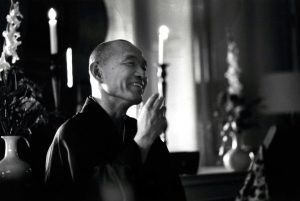

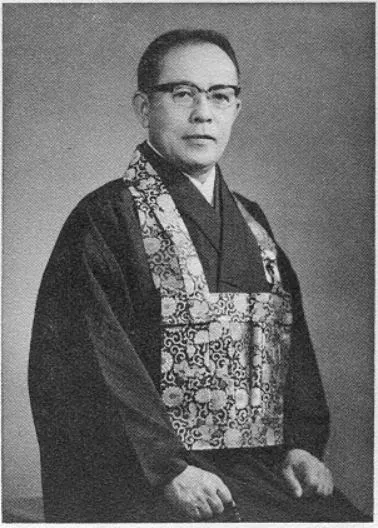

Lineage Charts
Lineage Shared Between Clear and Open Mind Zen
Common Legendary Buddhas
Vipassī Buddha
Sikhī Buddha
Vessabhū Buddha
Kakusandha Buddha
Koṇāgamana Buddha
Kassapa Buddha
Śākyamuni Buddha
Common Indian Patriarchs
Mahākāśyapa
Ānanda
Śaṇavāsa
Upagupta
Dṛtaka
Micchaka
Vasumitra
Buddhanandi
Buddhamitra
Pārśva
Puṇyayaśas
Aśvaghoṣa
Kapimala
Nāgārjuna
Kānadeva (Āryadeva)
Rāhulata
Sanghanandi
Gayāśata
Kumārata
Jayata
Vasubandhu
Manorhita
Haklenayaśas
Simha Bhikshu (Āryasimha)
Basiasita
Punyamitra
Prajñātāra
Bodhidharma
Common Chinese Ancestors
Dazu Huike
Jianzhi Sengcan
Dayi Daoxin
Daman Hongren
Dajian Huineng
Qingyuan Xingsi
Shitou Xiqian
Yaoshan Weiyan
Yunyan Tansheng
Dongshan Liangjie
Yunju Daoying
Tongan Daopi
Tongan Guanzhi
Liangshan Yuanguan
Dayang Jingxuan
Touzi Yiqing
Furong Daokai
Danxia Zichun
Changlu Qingliao
Tiantong Zongjue
Xuedou Zhijian
Tiantong Rujing
Common Japanese Ancestors
Eihei Dōgen
Koun Ejō
Tettsū Gikai
Keizan Jōkin
Gasan Jōseki
Divergent Lineage Charts
Matsuoka Lineage
Tsūgen Jakurei
Sekioku Sinryō
Chikkyo Shoyū
Zaisan Don’ei
Kishi Iban
Daian Shueki
Ishū Chūshin
Shunmei Shitō
Unan Toryū
Ryūshitsu Chikyū
Yōshitsu Zuijaku
Kaiō Genkyo
Ryūun Eishū
Daishitsu Chōyū
Kan’oku Shuntoku
Ryūzan Shūdon
Chikurin Eikai
Chikuō Shōrin
Renbaku Shōhen
Tetsugin Shuyō
Ryōchō Shōtatsu
Tanzan Kyōhō
Chikuyhō Shuzan
Kidō Gikan
Honkō Jissen
Chōgai Kenshū
Shōshū Gendō
Ryōzan Entō
Ittō Kankoku
Gentei Kanryū
Nannō Suiō
Bukkai Sentoyu
Zengaku Sōyū (Matsuoka Rōshi)
Hogaku Shozen McGuire
Daiho Hilbert
Shoji Sorensen
Maezumi Lineage
Taigen Soshin
Baizan Monpon
Nyochu Tengin
Kisan Shosan
Morin Shihan
Shoshi Sotai
Kenchu Hantetsu
Daiju Soko
Kinpo Jusen
Kajin Sochin
Tetsuei Seiton
Shukoku Choton
Ketsuzan Tetsuei
Hoshi Soon
Goho Kainon
Tenkei Denson
Shozan Monko
Niken Sekiryo
Reitan Roryu
Kakujo Tosai
Kakuan Ryogu
Ryoka Daibai
Ungan Guhaku
Baian Hakujun
Taizan Maezumi
Tetsugen Glassman
Enkyo O’Hara
Shuzen Harris
Fusho Rapaport